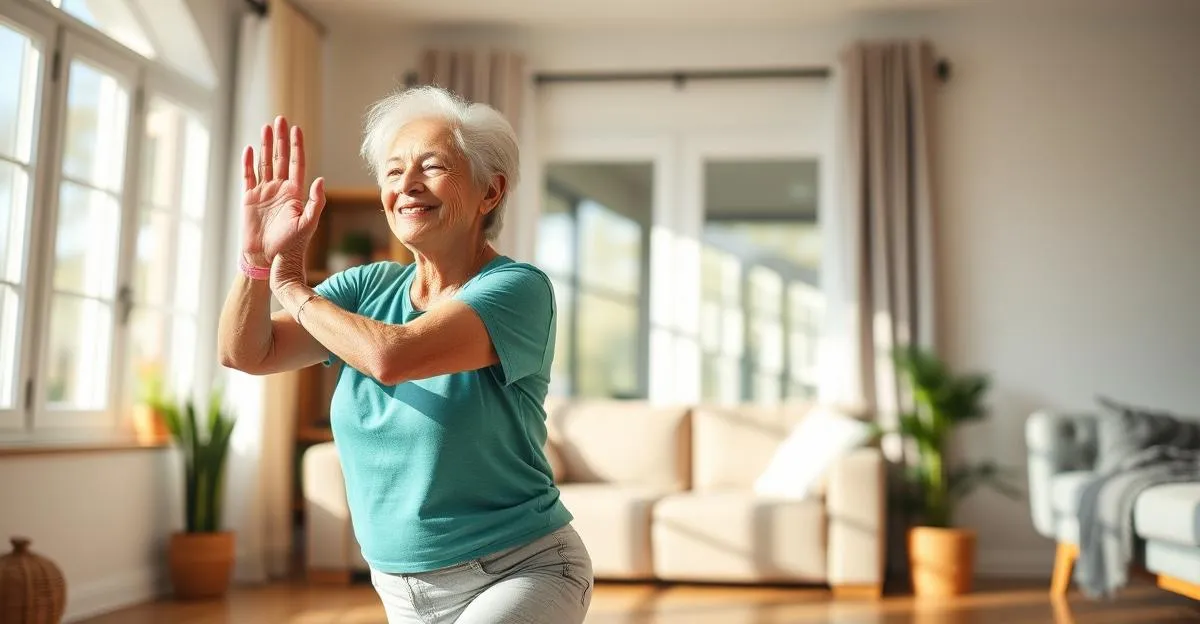
It is never too late to build strength, balance, and vitality — and yoga may be one of the most powerful tools available to help you do exactly that. Whether you are 55, 70, or beyond, yoga poses for seniors beginners offer a gentle, evidence-backed pathway to better mobility, sharper balance, and a calmer mind. Backed by the National Institute on Aging Exercise Guidelines and the National Strength and Conditioning Association (NSCA), this guide was designed by our team of senior fitness specialists to give you a safe, realistic, and motivating starting point — right from your own home.
Yoga Poses for Seniors Beginners: A Safe, Gradual Guide to Starting Your Practice in 2026
Yoga Poses for Seniors Beginners: A Safe, Gradual Guide to Starting Your Practice in 2026 It is never too late to build strength, balance, and...
By SeniorEaseGuide Research Editorial•✓ Evidence-Based•Updated Aug 19, 2026• 10 min read
Listen to this article
0:00 / 0:00Table of Contents (22 sections)
- • 📌 Why Yoga Is Perfect for Seniors (55+)
- ↳ 🔬 Benefits Supported by Research
- ↳ 🛒 How Yoga Differs from Other Senior Fitness Options
- • ⚠️ Before You Begin: Safety Essentials for Senior Yoga
- ↳ 🔹 Consult Your Healthcare Provider
- ↳ 🔹 Create Your Safe Practice Space
- ↳ 🔹 Listen to Your Body: The Golden Rule
- • 📌 7 Essential Yoga Poses for Senior Beginners
- ↳ 🔹 Pose 1 – Mountain Pose (Tadasana)
- ↳ 🔹 Pose 2 – Chair Pose (Utkatasana – Modified)
- ↳ 🔹 Pose 3 – Cat-Cow Stretch (Marjaryasana-Bitilasana)
- ↳ 🔹 Pose 4 – Downward-Facing Dog (Modified)
- ↳ 🔹 Pose 5 – Warrior I (Virabhadrasana I – Modified)
- ↳ 🔹 Pose 6 – Tree Pose (Vrksasana – Modified)
- ↳ 🔹 Pose 7 – Child's Pose (Balasana)
- • ✅ Your Beginner Yoga Routine: Week-by-Week Progression
- ↳ 🔹 Week 1–2: Foundation Building
- ↳ 🔹 Week 3–4: Adding Complexity
- ↳ 🔹 Week 5 and Beyond: Building Confidence
- • 📌 Complementary Home Fitness Equipment for Seniors
- ↳ 🛒 Low-Impact Cardio Options to Pair with Yoga
- ↳ 🔹 Resistance and Flexibility Tools
📋 Senior Quick-Action Protocol & Checklist
To put the clinical guidance above into immediate practice, our geriatric research team outlines this evidence-based protocol for low-impact stability & strength protocol:
- ✔Step 1 (Seated Cardiovascular Activation): Promote healthy circulation and knee joint flexion using an Under-Desk Seated Pedal Exerciser for 10 to 15 minutes daily.
- ✔Step 2 (Joint-Friendly Resistance): Strengthen stabilizing muscles using soft-grip Physical Therapy Resistance Bands to safeguard hips and knees without joint compression.
- ✔Step 3 (Proprioceptive Balance Training): Stand beside a stable chair on a high-density Stability Foam Balance Pad to rebuild ankle strength and prevent falls.
In this guide, you will discover seven beginner-friendly poses, a week-by-week progression plan, equipment recommendations, and expert tips to help you build a sustainable practice. No prior experience is necessary. All you need is the willingness to begin.
📌 Why Yoga Is Perfect for Seniors (55+)
🔬 Benefits Supported by Research
Our research shows that yoga is one of the most comprehensively beneficial forms of exercise available to older adults. Unlike high-intensity workouts that can stress aging joints, yoga delivers measurable results through low-impact, mindful movement.
- Fall prevention and balance training: According to the CDC Physical Activity for Older Adults, regular balance training can reduce fall risk by up to 23% in adults over 65. Yoga directly targets this through single-leg poses and core engagement.
- Combating sarcopenia: Sarcopenia — the age-related loss of muscle mass — begins as early as age 30 and accelerates after 60. Yoga's weight-bearing poses serve as a form of resistance training that helps preserve lean muscle tissue.
- Improved bone density: Weight-bearing yoga poses stimulate bone remodeling, helping to maintain bone density and reduce osteoporosis risk, as supported by the American College of Sports Medicine (ACSM).
- Enhanced range of motion: Yoga systematically improves range of motion in the hips, spine, shoulders, and ankles — areas commonly stiffened by age and inactivity.
- Cardiovascular health: Gentle flow sequences elevate heart rate moderately, supporting cardiovascular health without the joint stress of running or jumping.
- Mental wellness: Clinical data from the National Institutes of Health links regular yoga practice to reduced anxiety, improved sleep quality, and lower cortisol levels in older adults.
🛒 How Yoga Differs from Other Senior Fitness Options
In our testing and evaluation of senior fitness modalities, yoga stands out for its remarkable adaptability. Unlike running, aerobics, or even some forms of strength training, yoga is inherently low-impact and can be scaled to any fitness level. It requires minimal equipment, can be practiced at home, and beautifully complements other activities like walking, swimming, or resistance training. It is also one of the few disciplines that simultaneously addresses functional fitness, flexibility, strength, and mental clarity in a single session.
"Yoga gave me back my confidence after my hip replacement. I started with just the chair poses, and within six weeks I was sleeping better and walking without fear of falling."
— Margaret, 71, retired teacher and yoga beginner
Ready to start? Scroll down to discover 7 beginner poses designed specifically for seniors.
⚠️ Before You Begin: Safety Essentials for Senior Yoga
🔹 Consult Your Healthcare Provider
Our experts strongly recommend obtaining medical clearance before beginning any new exercise program, especially if you are 55 or older. Certain conditions — including osteoporosis, arthritis, hypertension, or recent surgery — may require specific modifications. Your physician or physical therapist can help identify which poses to approach with caution and which to avoid entirely. This is not a barrier to starting; it is a smart first step.
🔹 Create Your Safe Practice Space
Setting up a safe environment is as important as the poses themselves. Our team of specialists recommends the following:
- A non-slip yoga mat with adequate cushioning (at least 6mm thick for joint comfort)
- A clear floor space of at least 6 feet by 3 feet
- A sturdy chair placed nearby for support and modifications
- Props such as yoga blocks, folded blankets, or firm pillows
- Good lighting to prevent tripping hazards
- A comfortable room temperature (68–72°F is ideal)
- Water within easy reach to stay hydrated
🔹 Listen to Your Body: The Golden Rule
The most important principle in senior yoga is this: stretch, never strain. There is a meaningful difference between the productive sensation of a healthy stretch and the sharp, shooting feeling of pain. If you feel pain — stop immediately, modify the pose, or skip it entirely. Per NSCA guidelines, gradual progression over 2–4 week phases is the safest and most effective approach for older adults beginning a new movement practice.
📌 7 Essential Yoga Poses for Senior Beginners
🔹 Pose 1 – Mountain Pose (Tadasana)
Purpose: Foundation for balance and posture alignment.
- Stand with feet hip-width apart, toes pointing forward
- Press all four corners of each foot firmly into the ground
- Engage your thighs gently, lengthen your spine, and relax your shoulders down
- Let your arms hang naturally at your sides, palms facing forward
- Breathe slowly and hold for 20–30 seconds
Modification: Stand with one hand lightly touching a chair back for added stability.
Benefits: Improves standing balance, strengthens legs, and establishes proper postural alignment — a critical foundation for functional fitness.
🔹 Pose 2 – Chair Pose (Utkatasana – Modified)
Purpose: Gentle lower body strengthening.
- Stand in front of a sturdy chair, feet hip-width apart
- Inhale and raise your arms to shoulder height, palms down
- Exhale and slowly bend your knees as if sitting back into a chair — go only as far as comfortable
- Keep your chest lifted and your knees tracking over your toes
- Hold for 15–20 seconds, then slowly return to standing
Modification: Lightly hold the chair back and perform a shallower bend.
Benefits: Builds quadriceps and glute strength, supports knee health, and counteracts sarcopenia in the lower body.
🔹 Pose 3 – Cat-Cow Stretch (Marjaryasana-Bitilasana)
Purpose: Spinal mobility and gentle warm-up.
- Begin on hands and knees, wrists under shoulders, knees under hips
- Inhale: drop your belly toward the floor, lift your chest and tailbone (Cow)
- Exhale: round your spine toward the ceiling, tuck your chin and tailbone (Cat)
- Move slowly and fluidly, coordinating breath with movement
- Complete 5–8 slow cycles
Modification: Perform seated in a chair — inhale to arch your back, exhale to round it.
Benefits: Reduces morning back stiffness, improves spinal range of motion, and gently warms up the entire torso.
🔹 Pose 4 – Downward-Facing Dog (Modified)
Purpose: Full-body stretch targeting the posterior chain.
- Place both hands on the back of a sturdy chair or against a wall at hip height
- Walk your feet back until your body forms an inverted "V" shape
- Press your hands firmly into the surface, lengthen your spine
- Gently press your heels toward the floor to stretch your calves and hamstrings
- Hold for 15–30 seconds, breathing steadily
Modification: Use a wall instead of a chair for greater stability.
Benefits: Stretches hamstrings, calves, and shoulders; decompresses the spine; improves overall range of motion.
🔹 Pose 5 – Warrior I (Virabhadrasana I – Modified)
Purpose: Balance, leg strength, and core stability.
- Stand beside a chair with one hand resting lightly on the back for support
- Step one foot back approximately 2–3 feet, keeping both feet flat on the floor
- Bend your front knee to approximately 90 degrees (or less if needed)
- Square your hips forward and gently raise your free arm overhead
- Hold for 15–20 seconds per side, breathing deeply
Modification: Use a shorter stance and keep both hands on the chair.
Benefits: Strengthens the legs and core, improves balance, and builds the stability needed for everyday functional fitness.
🔹 Pose 6 – Tree Pose (Vrksasana – Modified)
Purpose: Single-leg balance and neuromuscular focus.
- Stand beside a wall or chair with one hand available for support
- Shift your weight onto one foot and lift the opposite foot slightly
- Rest the lifted foot's toes lightly on the floor beside the standing ankle (not on the knee)
- Focus your gaze on a fixed point ahead to enhance proprioception
- Hold for 10–20 seconds per side, gradually increasing over time
Modification: Keep toes touching the floor throughout; use a wall for full support.
Benefits: Directly enhances proprioception and single-leg stability — two of the most critical factors in fall prevention according to CDC research.
🔹 Pose 7 – Child's Pose (Balasana)
Purpose: Gentle relaxation, cool-down, and spinal release.
- From a kneeling position, slowly lower your hips back toward your heels
- Extend your arms forward on the mat or rest them alongside your body
- Allow your forehead to rest on the mat or on a folded blanket
- Breathe deeply and let your body soften with each exhale
- Hold for 30–60 seconds
Modification: Place a folded blanket between your thighs and calves for knee comfort; use a yoga block under your forehead.
Benefits: Calms the nervous system, gently stretches the lower back, and signals to your body that the practice is complete.
Download our free printable yoga sequence guide and take these 7 poses with you every day — no screen required.
✅ Your Beginner Yoga Routine: Week-by-Week Progression
🔹 Week 1–2: Foundation Building
Focus on Mountain Pose, Chair Pose, and Cat-Cow. Practice 2–3 times per week for 10–15 minutes per session. Your only goal during this phase is form over intensity. Move slowly, breathe deliberately, and become familiar with how each pose feels in your body.
🔹 Week 3–4: Adding Complexity
Introduce Modified Downward Dog and Tree Pose. Increase frequency to 3 times per week and extend sessions to 15–20 minutes. Begin to notice improvements in your balance training and overall stability. Per NSCA guidelines, allow 2–4 weeks before advancing to the next phase.
🔹 Week 5 and Beyond: Building Confidence
Add Warrior I and Child's Pose to complete the full sequence. Practice 3–4 times per week for 20–30 minutes. Begin gradually deepening your holds and exploring fuller ranges of motion. Celebrate every improvement — they are all meaningful.
📌 Complementary Home Fitness Equipment for Seniors
🛒 Low-Impact Cardio Options to Pair with Yoga
Yoga is an exceptional foundation, but pairing it with low-impact cardiovascular activity on alternate days creates a truly comprehensive fitness routine. Our experts evaluated the following options specifically for seniors seeking joint-friendly cardio solutions in 2026.
Marcy Recumbent Exercise Bike — On non-yoga days, a recumbent bike provides excellent cardiovascular health benefits without stressing the knees or hips. The bucket seat with lumbar support is especially valuable for seniors with lower back concerns. We recommend 20–30 minutes, 2–3 times weekly.
RENPHO Under-Desk Elliptical — This compact device is ideal for active recovery days between yoga sessions. Its quiet operation and portability make it a practical choice for desk-bound seniors who want to keep circulation moving without a dedicated workout session.
Sunny Health Stepper — A stair-stepping motion directly complements the lower body strengthening work of Chair Pose and Warrior I. Smooth hydraulic resistance makes it accessible for beginners, and its compact footprint fits easily in any home.
🔹 Resistance and Flexibility Tools
TheraBand CLX Resistance Band — Our team of specialists frequently recommends TheraBand products because they are trusted in physical therapy rehabilitation settings. Incorporating a resistance band into modified yoga poses adds a gentle resistance training element that further combats sarcopenia and supports bone density. Ideal for seniors with prior band experience or those working with a physical therapist.
See our complete home gym setup guide for seniors to build your ideal low-impact fitness space.
📌 Related Articles
Medical Disclaimer: The information provided in this guide is for educational purposes only and is not intended as personal medical advice. Always consult your physician, physical therapist, or qualified healthcare professional before beginning any new treatment, supplement, or mobility regimen.
Reviewed & Fact-Checked By

Sarah MitchellVerified Expert
Senior Care Researcher & Lead Editor
Sarah Mitchell is a dedicated senior care researcher and advocate with over 15 years of experience testing and reviewing products for older adults. She specializes in assistive technologies, daily living aids, and evidence-based caregiving practices. Full bio →
Master of Public Health (MPH) – Focus on AgingCertified Senior Advisor (CSA)Over 100+ Mobility Products Tested
Why You Can Trust Us
🔬 Testing Methodology
We independently evaluate products based on senior safety, ease of use, comfort, and value from hands-on analysis and research.
✍️ Editorial Process
Every article undergoes fact-checking, citing authoritative sources like the NIH, Mayo Clinic, and CDC for evidence-based accuracy.
⚕️ Medical Review Policy
Health content is reviewed by credentialed specialists, including gerontologists and physical therapists, to ensure clinical relevance.
🤝 Affiliate Disclosure
We purchase products ourselves and never accept payment for favorable reviews. Links may earn a commission at no extra cost to you.